
Bushfire compliance is top of mind for many homeowners, as well as people involved in the construction industry.
Steel is deemed to be non combustible and hence is widely recognised as an excellent product to use in bushfire prone areas.
Deemed-to-Satisfy Solutions
There are two independent Deemed-to-Satisfy (DtS) solutions for construction in designated bushfire prone areas, which take different approaches. These are:
- AS3959 Construction of buildings in bushfire prone areas (which is designed to improve the resistance to bushfire attack from burning embers, radiant heat and flame contact) OR
- NS300 NASH Standard – Steel Framed Construction in Bushfire Areas (which is designed to reduce the risk of ignition from bushfire attack through the use of non combustible building materials such as steel framing and cladding and/or other materials deemed by the NCC to be suitable where non combustible materials are required).
Following the NASH Standard can offer significant cost savings and ease of construction, particularly in Flame Zone areas.
It is important to note that construction must follow either the NASH Standard pathway OR the AS3959 pathway. Pathway elements cannot be mixed, for example a wall constructed to AS3959 will not comply with a roof constructed to the NASH standard.
References and Resources
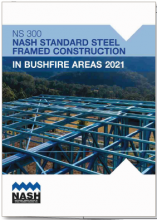
Available for Purchase
The NASH Standard is available to purchase on the NASH website in either PDF or hardcopy format.
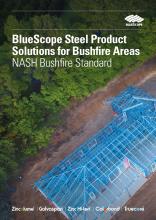
Download PDF
BlueScope overview document on the NASH standard.
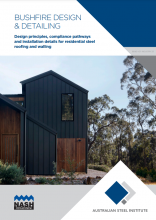
Visit Website
This joint ASI/NASH resource (including a webpage, PDF resource and video) provides an overview of designing in Bushfire Areas. It includes design principles, compliance pathways and installation details for residential steel roofing and walling.

Featured Topic
Marine Environments
Get tips about building with LGS in marine zones - where a greater level of isolation from the external environment is required to prevent salt-laden air from contacting the LGS frame.